
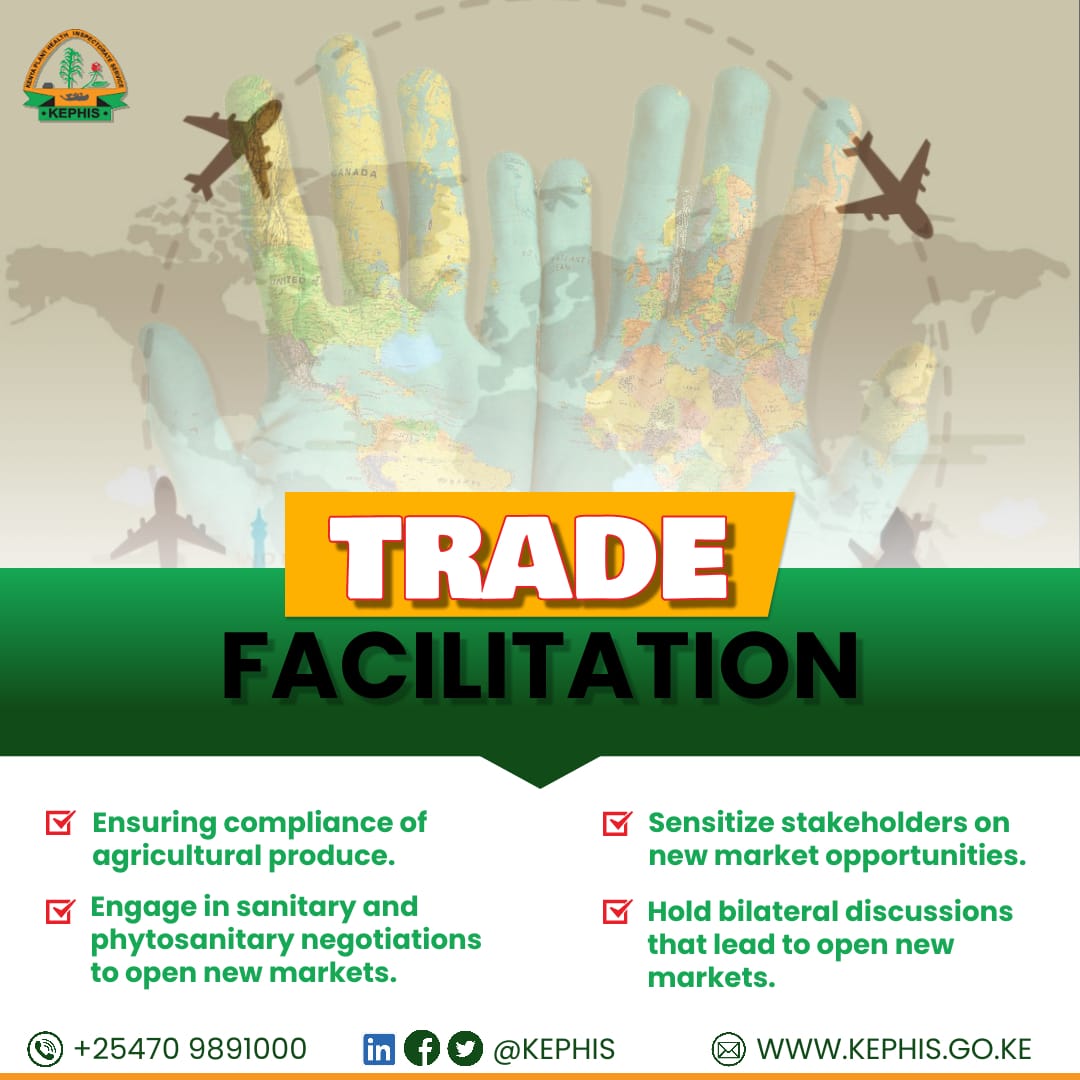
Ensuring Safe Trade: The role of KEPHIS in streamlining Agricultural Exports
Trade facilitation remains a key objective for the Kenya Plant Health Inspectorate Service (KEPHIS). The Service’s primary purpose is to open new as well as maintain existing markets, simplify border procedures, and facilitate the movement, release, and clearance of plant based goods. To support KEPHIS achieve her trade facilitation role, Kenya is a signatory to the World Trade Organization Sanitary and Phytosanitary Agreement and a member of the International Plant Protection Convention.
Over the years, Kenya, through KEPHIS, has secured markets for its agricultural produce to: European Union,China, Australia, United Kingdom , America and United Arab Emirates among other countries in the African continent. Recently Kenya has secured new markets for its avocadoes to India and mangoes to Jordan.
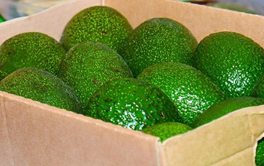
Avocado and Mango Fruits
As part of its trade facilitation efforts, KEPHIS ensures that Kenya's agricultural produce complies with regional and international standards through phytosanitary certification. Additionally, KEPHIS has continued to engage in sanitary and phytosanitary bilateral discussions, such as Strategic and Investment Partnership with the USA and discussions with the United Arab Emirates, leading to the opening of new markets worldwide._
To achieve her trade facilitation objectives KEPHIS undertakes the following:
✓Conducts inspections, audits, and testing for phytosanitary and food safety compliance.
✓Supports the production of disease-free export products by: identifying pest-free areas, developing pest free places of production and conducting pest risk analysis.
✓ Automation of its services through the Integrated Export Import Certification System thus enhancing service delivery.
✓ Participates in regional and international standard-setting and harmonization activities to ensure compliance with standards in the East African Community , Common Market for Eastern Southern Africa, (AFCFTA), Codex Alimentarius and IPPC.
✓ Capacity building stakeholders on export market requirements.
✓Developing relevant policies for instance the National Phytosanitary Policy 2023.